
Introduction
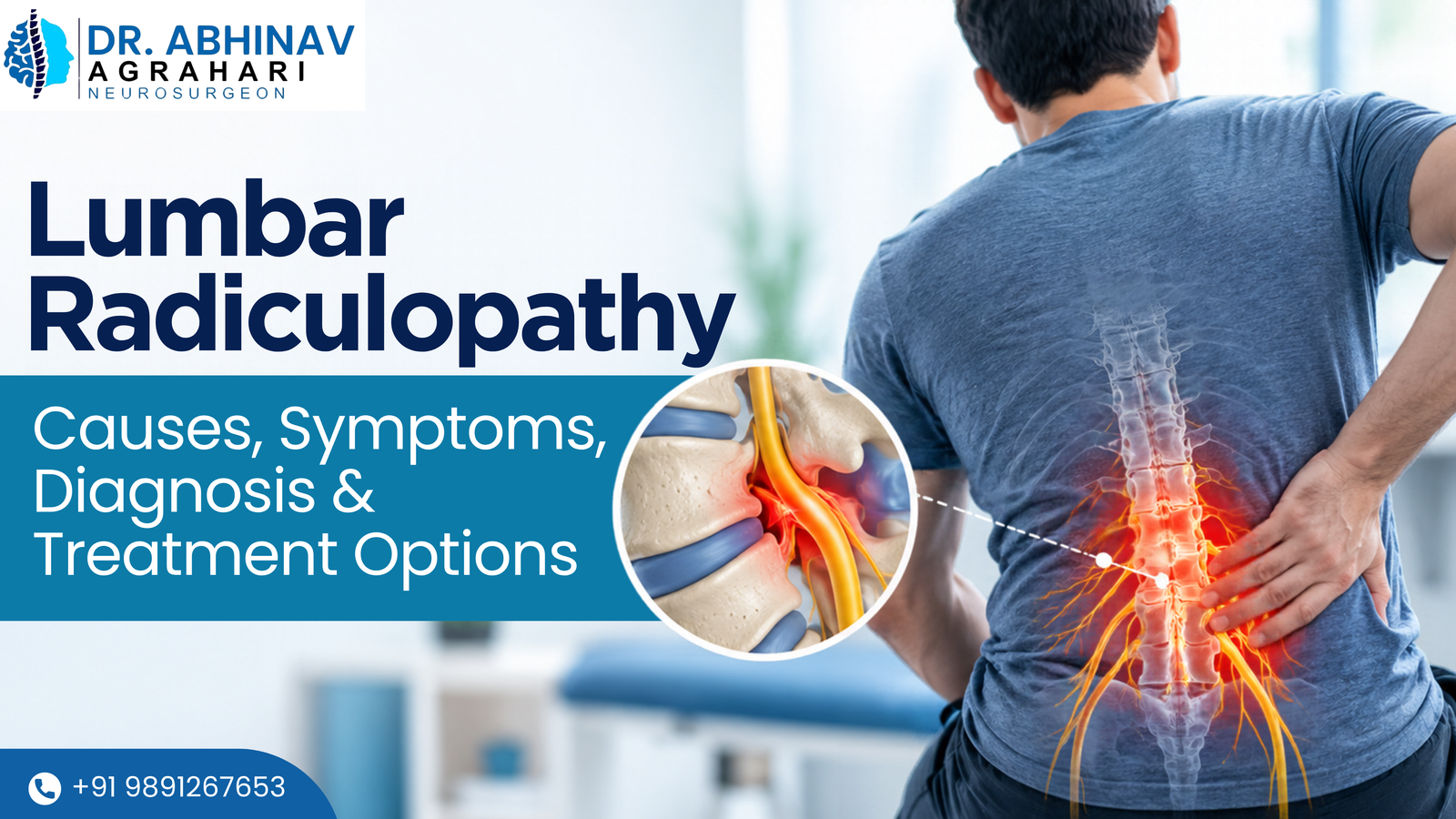
Lumbar radiculopathy is a common spinal condition that occurs when one or more nerve roots in the lower back become compressed, irritated, or inflamed. It can cause pain that travels from the lower back into the hips, buttocks, and legs. Depending on the severity, patients may also experience tingling, numbness, muscle weakness, and difficulty walking or performing everyday activities.
Early diagnosis and appropriate treatment are important to prevent worsening nerve damage and improve mobility. Consulting the Best Neurosurgeon in South Delhi can help patients understand the underlying cause of their symptoms and receive a personalised treatment plan.
What Is Lumbar Radiculopathy?
Lumbar radiculopathy refers to a condition in which nerves emerging from the lumbar spine (lower back) become irritated or compressed. These nerves carry signals between the brain, spinal cord, and lower body. When pressure affects a nerve root, pain and other neurological symptoms may develop along its pathway.
The condition is commonly associated with sciatica, particularly when compression affects the sciatic nerve roots. However, lumbar radiculopathy can involve different nerve roots and produce symptoms in different areas of the legs.
People experiencing persistent lower back pain with radiating leg discomfort should consider an evaluation by the Best Neurosurgeon in South Delhi to identify the affected nerve and determine suitable treatment options.
Common Causes of Lumbar Radiculopathy
Several spinal conditions can cause nerve root compression or irritation. The most common causes include:
1. Herniated Disc: A spinal disc may bulge or rupture, allowing its inner material to press against a nearby nerve root. This is one of the leading causes of lumbar radiculopathy.
2. Degenerative Disc Disease: As people age, spinal discs gradually lose hydration and flexibility. This degeneration may reduce the space available for nerves and contribute to nerve irritation.
3. Lumbar Spinal Stenosis: Narrowing of the spinal canal or nerve passageways can put pressure on the spinal nerves, particularly during standing or walking.
4. Bone Spurs: Age-related changes in the spine can lead to the formation of extra bone growths that compress nearby nerve roots.
5. Spondylolisthesis: This condition occurs when one vertebra slips forward over another, potentially narrowing the spaces through which spinal nerves travel.
6. Spinal Injuries: Accidents, falls, or other traumatic injuries can damage spinal structures and cause nerve compression.
Identifying the exact cause is essential for effective treatment. A consultation with the Best Neurosurgeon in South Delhi can help determine whether symptoms are related to disc problems, spinal degeneration, or another underlying condition.
Symptoms of Lumbar Radiculopathy
Symptoms vary depending on which nerve root is affected and the degree of compression. Common warning signs include:
- Lower Back Pain: Persistent or sharp pain in the lumbar region.
- Radiating Leg Pain: Pain that travels from the lower back into the buttocks, thighs, calves, or feet.
- Tingling Sensation: A pins-and-needles feeling in the legs or feet.
- Numbness: Reduced sensation in specific areas of the lower body.
- Muscle Weakness: Difficulty lifting the foot, standing on the toes, or climbing stairs.
- Pain During Movement: Symptoms may worsen while sitting, bending, coughing, or sneezing.
- Difficulty Walking: Severe nerve compression may affect balance, strength, and mobility.
If symptoms persist or progressively worsen, an evaluation by the Best Neurosurgeon in South Delhi can help prevent delays in diagnosis and appropriate treatment.
Important: New bladder or bowel control problems, numbness around the groin or saddle area, or rapidly progressing leg weakness may indicate cauda equina syndrome. These symptoms require immediate emergency medical assessment.
How Is Lumbar Radiculopathy Diagnosed?
Accurate diagnosis helps doctors identify the affected nerve root and understand the severity of compression. The evaluation generally involves the following steps:
1. Medical History: The doctor asks about the location, duration, intensity, and pattern of pain, along with any history of spinal injuries or previous treatment.
2. Physical and Neurological Examination: Muscle strength, reflexes, sensation, walking ability, and spinal movement are assessed. Specific tests, such as the straight leg raise test, may help identify nerve irritation.
3. MRI Scan: Magnetic Resonance Imaging provides detailed images of spinal discs, nerves, and surrounding soft tissues. It can help identify herniated discs and nerve compression.
4. X-rays: Spinal X-rays may be recommended to evaluate bone alignment, degenerative changes, and vertebral abnormalities.
5. Nerve Conduction Studies and EMG: These tests may be advised when doctors need additional information about nerve function or want to distinguish radiculopathy from other neurological conditions.
A comprehensive assessment by the Best Neurosurgeon in South Delhi helps ensure that treatment recommendations are based on the patient's symptoms, examination findings, and imaging results.
Treatment Options for Lumbar Radiculopathy
Treatment depends on the underlying cause, symptom severity, and the presence of neurological weakness. Many patients improve with non-surgical management.
1. Medications: Doctors may prescribe pain relievers, anti-inflammatory medicines, or selected nerve pain medications depending on the patient's condition.
2. Physiotherapy: Guided exercises can improve flexibility, strengthen supporting muscles, and reduce pressure on irritated nerve structures. Patients should follow an individualised rehabilitation programme.
3. Lifestyle Modifications: Maintaining a healthy weight, avoiding prolonged sitting, improving posture, and practising safe lifting techniques can help reduce stress on the lower back.
4. Epidural Steroid Injections: In selected cases, corticosteroid injections around the affected nerve may provide temporary relief by reducing inflammation.
5. Surgical Treatment: Surgery may be considered when severe pain continues despite appropriate conservative treatment, or when significant or progressive neurological weakness develops. Depending on the cause, procedures such as microdiscectomy or spinal decompression may be recommended.
Patients seeking the Best Neurosurgeon in South Delhi should discuss the potential benefits, risks, recovery time, and suitability of each treatment option before making a decision.
Can Lumbar Radiculopathy Be Prevented?
Although not all cases can be prevented, certain habits may help protect spinal health:
- Maintain good posture while sitting and standing.
- Exercise regularly to strengthen core and back muscles.
- Avoid lifting heavy objects incorrectly.
- Maintain a healthy body weight.
- Take regular breaks from prolonged sitting.
- Avoid smoking, as it can negatively affect spinal disc health.
These preventive measures may reduce strain on the spine and support long-term mobility.
Frequently Asked Questions (FAQs)
1. What is the main cause of lumbar radiculopathy?
A herniated or slipped disc is one of the most common causes. Other causes include spinal stenosis, degenerative disc disease, bone spurs, and vertebral slippage.
2. Is lumbar radiculopathy the same as sciatica?
No. Lumbar radiculopathy refers to irritation or compression of a lumbar nerve root. Sciatica describes pain that travels along the sciatic nerve pathway and is commonly caused by lumbar radiculopathy.
3. Can lumbar radiculopathy heal without surgery?
Yes. Many patients improve with medications, physiotherapy, activity modification, and other non-surgical treatments. Surgery is generally considered when conservative treatment fails or serious neurological symptoms develop.
4. How long does lumbar radiculopathy take to recover?
Recovery varies depending on the cause and severity. Many patients experience improvement within a few weeks, although some cases may take several months and require continued treatment.
5. When should I consult a neurosurgeon for lumbar radiculopathy?
Consult a neurosurgeon if you experience persistent radiating leg pain, numbness, muscle weakness, or difficulty walking. Sudden bladder or bowel dysfunction, saddle numbness, or rapidly worsening weakness requires immediate emergency medical attention.

