
Spinal Arachnoid Cyst: Symptoms, Diagnosis, Treatment & Surgical Management
Introduction
A spinal arachnoid cyst is an uncommon condition that develops around the spinal cord or nerve roots. It involves a fluid-filled sac that forms within or around the arachnoid membrane, one of the protective layers covering the brain and spinal cord. Although many spinal arachnoid cysts do not cause noticeable symptoms, some can compress nearby nerves or the spinal cord, leading to pain, weakness, numbness, and difficulty walking.
Early diagnosis and appropriate treatment are important to prevent potential neurological complications. Consulting the Best Neurosurgeon in South Delhi can help patients understand their condition and explore suitable treatment options based on the cyst's size, location, and severity.
What Is a Spinal Arachnoid Cyst?
A spinal arachnoid cyst is a sac containing cerebrospinal fluid (CSF) that develops in or around the arachnoid membrane. This membrane helps protect the spinal cord and maintain the normal circulation of cerebrospinal fluid.
These cysts may develop inside the dura (intradural) or outside it (extradural). Their location plays an important role in determining the symptoms and treatment approach.
Some cysts remain small and are discovered accidentally during imaging tests performed for unrelated conditions. However, larger cysts may put pressure on the spinal cord and surrounding nerves. Patients experiencing persistent back pain or neurological symptoms should consider an evaluation by the Best Neurosurgeon in South Delhi for an accurate diagnosis.
Common Symptoms of Spinal Arachnoid Cysts
Symptoms depend on the cyst's size, location, and the amount of pressure it places on nearby neurological structures. Some patients may not experience any symptoms, while others develop gradually worsening problems.
Common symptoms include:
- Back pain: Persistent or recurring pain in the affected spinal region.
- Neck pain: Cysts in the cervical spine may cause discomfort and stiffness in the neck.
- Numbness and tingling: Pressure on spinal nerves can produce unusual sensations in the arms, hands, legs, or feet.
- Muscle weakness: Compression of the spinal cord or nerve roots may affect muscle strength.
- Difficulty walking: Patients may experience balance problems, coordination difficulties, or an unsteady walking pattern.
- Changes in sensation: Reduced sensitivity to touch, temperature, or pain may occur.
- Bladder or bowel problems: In severe cases, nerve compression may interfere with bladder or bowel control.
Sudden leg weakness, new difficulty walking, or loss of bladder or bowel control requires urgent medical assessment. Early consultation with the Best Neurosurgeon in South Delhi can help identify spinal cord compression and prevent further complications.
What Causes Spinal Arachnoid Cysts?
The exact cause of spinal arachnoid cysts is not always known. However, they are generally classified into two major categories:
1. Congenital Arachnoid Cysts
These cysts are present from birth and develop due to abnormalities during the formation of the spinal membranes. They may remain unnoticed for years and become symptomatic later in life.
2. Acquired Arachnoid Cysts
These cysts may develop following certain conditions or events, including:
- Spinal injuries or trauma
- Previous spinal surgery
- Inflammation or infection involving the spinal membranes
- Adhesions or scarring around the spinal cord
Not every patient with a spinal injury or previous surgery develops an arachnoid cyst. A detailed evaluation by the Best Neurosurgeon in South Delhi can help determine the likely cause and assess whether the cyst requires treatment.
How Is a Spinal Arachnoid Cyst Diagnosed?
Accurate diagnosis is essential to identify the cyst's location, size, and impact on surrounding neurological structures. Doctors may recommend the following investigations:
1. Neurological Examination
The doctor evaluates muscle strength, reflexes, sensation, balance, and coordination. This examination helps identify possible signs of spinal cord or nerve compression.
2. MRI Scan
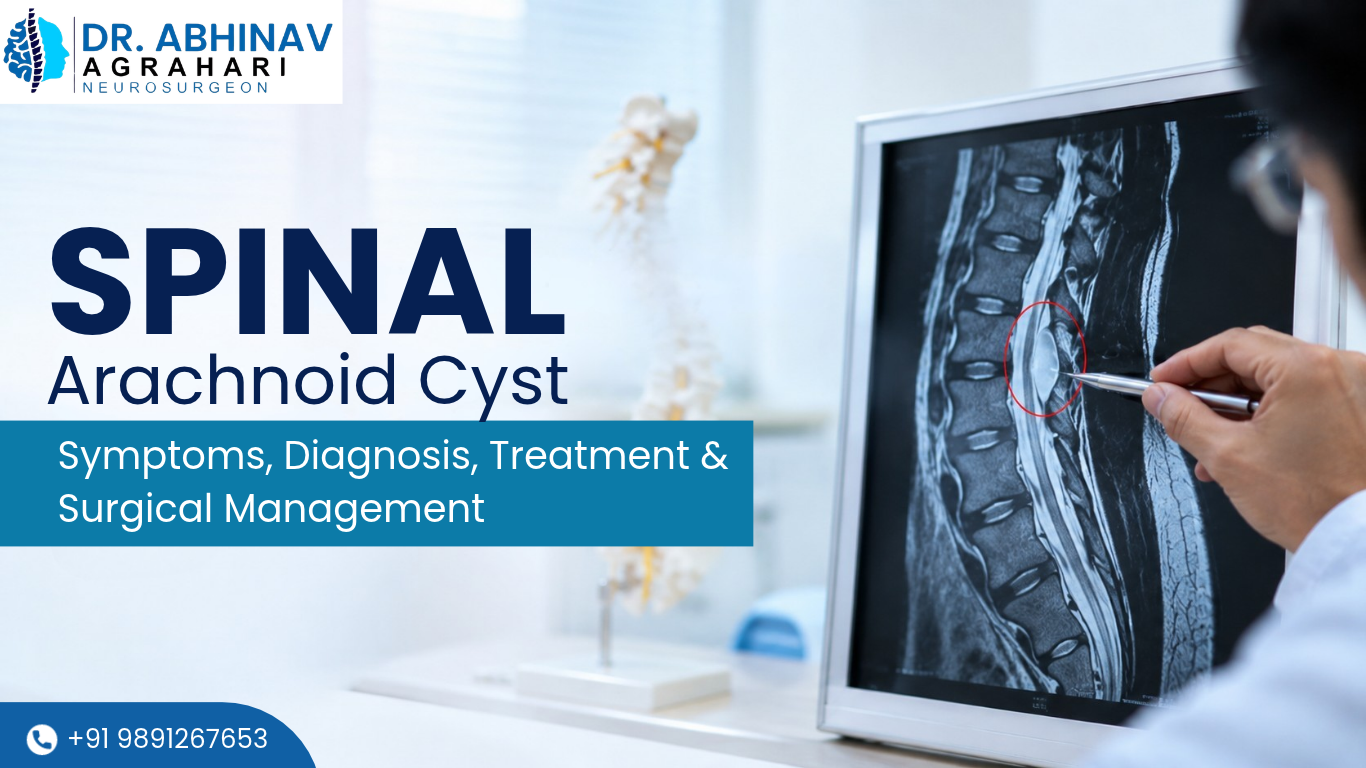
Magnetic Resonance Imaging (MRI) is the preferred imaging method for detecting spinal arachnoid cysts. It provides detailed images of the spinal cord, surrounding membranes, and cerebrospinal fluid spaces.
3. CT Myelography
In selected cases, CT myelography may be recommended. This investigation involves injecting contrast material into the cerebrospinal fluid space to evaluate the cyst and its communication with surrounding spaces.
4. Additional Investigations
Depending on the patient's symptoms and MRI findings, doctors may recommend further tests to rule out other spinal conditions.
Seeking an assessment from the Best Neurosurgeon in South Delhi helps patients understand their diagnosis and make informed decisions about treatment.
Treatment Options for Spinal Arachnoid Cysts
Treatment depends on whether the cyst is causing symptoms, compressing the spinal cord, or affecting nerve function.
1. Regular Monitoring
Small cysts that do not cause symptoms or neurological problems may not require immediate surgery. Doctors may recommend periodic MRI scans to monitor changes in cyst size and surrounding structures.
2. Medication and Symptom Management
Pain-relieving medicines may help manage discomfort when appropriate. However, medication does not remove the cyst or directly relieve significant spinal cord compression.
3. Surgical Treatment
Surgery may be recommended when the cyst causes persistent pain, progressive weakness, neurological deterioration, or significant compression of the spinal cord.
Surgical Management of Spinal Arachnoid Cysts
Surgical treatment aims to reduce pressure on the spinal cord and restore the normal circulation of cerebrospinal fluid.
Common surgical approaches include:
- Laminectomy: A small portion of the vertebral bone is removed to provide access to the cyst.
- Cyst Fenestration: The surgeon creates an opening in the cyst to allow cerebrospinal fluid to flow more freely.
- Cyst Excision: The cyst may be removed partially or completely when it is safe and technically possible.
- Microsurgical Decompression: Advanced surgical techniques are used to relieve pressure on the spinal cord and nearby nerves.
- Duraplasty: In selected cases, the dura may be reconstructed or enlarged to improve the flow of cerebrospinal fluid.
The choice of procedure depends on the cyst's location, type, size, and relationship with surrounding nerves. Surgery also carries risks, including cerebrospinal fluid leakage, infection, and recurrence. Patients should discuss the expected benefits and risks with an experienced specialist.
Consulting the Best Neurosurgeon in South Delhi can help determine whether surgery is necessary and which surgical approach may be appropriate.
Recovery After Spinal Arachnoid Cyst Surgery
Recovery varies depending on the surgical procedure, the patient's overall health, and the severity of neurological symptoms before treatment.
Most patients require regular follow-up appointments to monitor healing and neurological improvement. Doctors may recommend:
- Following post-operative instructions carefully.
- Avoiding heavy lifting and strenuous activities during the initial recovery period.
- Taking prescribed medications as directed.
- Attending follow-up appointments and recommended MRI scans.
- Participating in physiotherapy when advised.
Early treatment and appropriate rehabilitation can help improve recovery and support better long-term outcomes.
Frequently Asked Questions (FAQs)
1. Is a spinal arachnoid cyst a serious condition?
It depends on the cyst's size and location. Small cysts may not cause any problems, while larger cysts can compress the spinal cord or nerves and lead to neurological symptoms.
2. Can a spinal arachnoid cyst go away on its own?
Most spinal arachnoid cysts do not disappear spontaneously. However, asymptomatic cysts may remain stable for years and can often be managed through regular monitoring.
3. What is the best treatment for a spinal arachnoid cyst?
Treatment depends on the symptoms and severity. Observation may be sufficient for small, asymptomatic cysts, while symptomatic cysts causing spinal cord compression may require surgical decompression or cyst fenestration.
4. Is surgery necessary for every spinal arachnoid cyst?
No. Surgery is generally considered when the cyst causes significant pain, progressive neurological symptoms, or spinal cord compression. Patients without symptoms may only need regular follow-up.
5. How long does recovery take after spinal arachnoid cyst surgery?
Recovery varies depending on the surgical technique, the patient's health, and the severity of nerve compression. Some patients improve within weeks, while neurological recovery may take several months. Regular follow-up and rehabilitation may be recommended.

